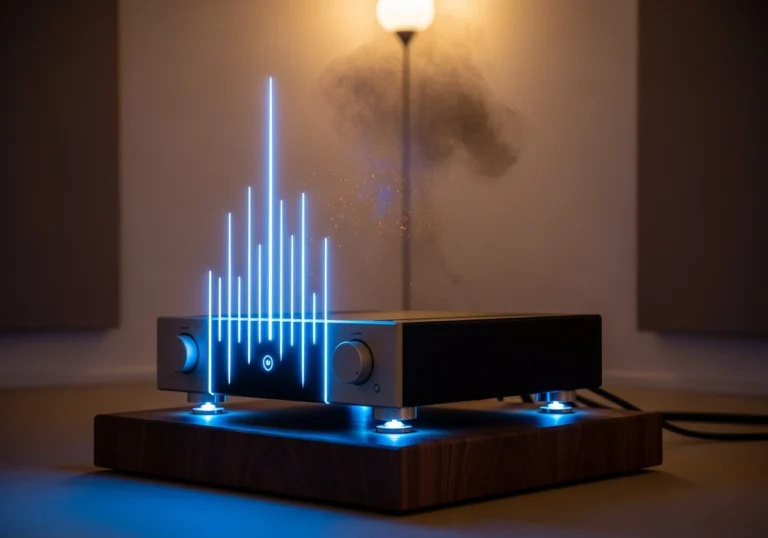
If you’re building a high-end audio system, you’ve likely hit a common crossroad: do you need a dedicated amplifier stand, a specialized isolation platform, or both? At first glance, they look like interchangeable pieces of premium audiophile furniture. However, from an acoustic and structural engineering standpoint, they serve completely different roles in your listening room.
Understanding this distinction is the key to unlocking the true potential of your high-fidelity components. Here is exactly how they differ, why your electronics care about the mechanical foundation, and how to choose the right setup for your power amps.
What Is an Amplifier Stand? (Placement & Airflow)
An amplifier stand is primarily a structural heavy-duty foundation designed to elevate heavy mono blocks or stereo amplifiers off the floor, a desktop, or a crowded main audio rack.
- Thermal Management & Ventilation: High-bias Class A and heavy Class A/B amplifiers generate massive amounts of heat. Placing them directly on a thick carpet suffocates the bottom chassis vents. A dedicated amplifier stand raises the components, creating a critical convective air chimney effect that keeps massive transformers running cool and extends component lifespan.
- Cable Management & Ergonomics: Heavy-gauge speaker cables and rigid, high-current power cords need physical structural clearance. Elevating the component prevents termination stress on the jacks and keeps your cable routing organized.
- Structural Support: High-end audio amplifiers frequently weigh anywhere from 50 to over 150 pounds. Standard home furniture or weak shelving sags under this physical weight. A robust, dedicated amplifier stand provides a rigid, high-capacity surface engineered not to deflect over time.
- Basic Mechanical Decoupling: While a standard solid wood stand alters how bass energy couples with the floorboards (often tightening up muddy low-end simply by changing the vertical node position), its primary engineering goal is positioning and structural stability, not complex sub-hz resonance dissipation.
What Is an Isolation Platform? (Vibration Dissipation)
An isolation platform is a highly specialized acoustic component disguised as a shelf. Its sole job is to mechanically “decouple” your sensitive audio equipment from the surrounding room environment and manage micro-vibrations.
- Managing Microphonics: Even modern solid-state gear suffers from microphonics. Capacitors, resistors, and internal circuit boards are sensitive to airborne acoustic feedback and structure-borne vibrations. According to acoustic engineering principles, these micro-vibrations introduce low-level distortion into the audio signal path.
- Internal vs. External Energy: An isolation platform works as a two-way street. It stops external disturbances (footfalls, sub-bass pressure waves from your subwoofers) from entering the amplifier chassis. Simultaneously, it acts as an energy sink, draining internal mechanical hum—like the physical 60Hz hum generated by massive toroidal transformers—out of the amplifier.
- Material Science & Dampening: True component isolation relies on alternating material densities (mass-loading via dense hardwoods like walnut or maple, granite, or composite MDF) combined with viscoelastic dampening layers (like Sorbothane, neoprene, or specialized decoupling springs) to convert kinetic vibration into harmless thermal energy.
The Core Difference in One Sentence: > A traditional amplifier stand optimizes where your electronics sit and breathe, while an isolation platform directly alters how those electronics perform.
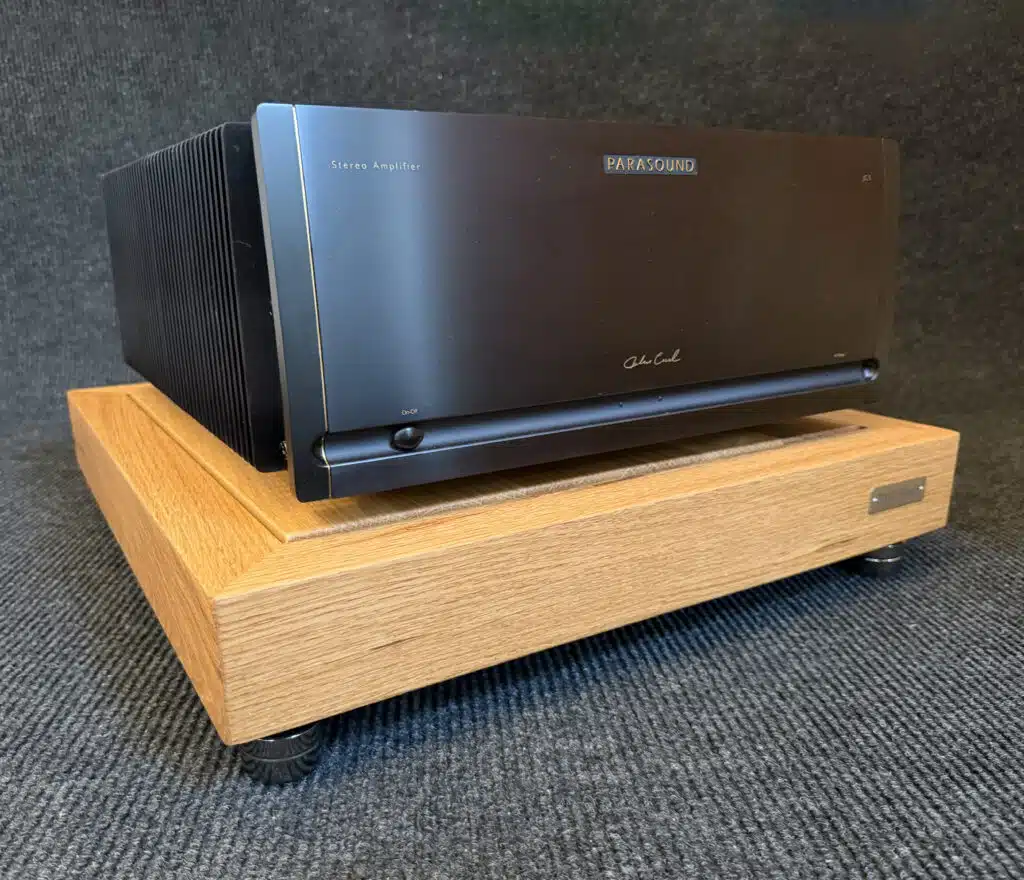
Why We Engineered a 2-in-1 Solution: The TAFImade ASPEN
As audiophiles and woodworkers, we noticed a frustrating trend in the community: enthusiasts were forced to buy a beautiful wooden amplifier stand, only to stack an awkward, industrial-looking third-party isolation slab right on top of it. It completely ruined the clean, minimalist aesthetics of the high-end listening room.
We designed the TAFImade ASPEN Amplifier Stand with High-End Isolation Platform to eliminate this compromise. It is a seamless, dual-purpose acoustic system:
- The Base Frame: A furniture-grade, heavy-duty amplifier stand that provides the perfect ground clearance, maximum underside airflow, and an elegant aesthetic that complements premium listening spaces.
- The Integrated Floating Platform: A built-in, decoupled isolation deck engineered specifically to absorb heavy transformer hum and block floor-borne resonance.
Instead of layering mismatched audio accessories, the ASPEN gives your amplifier the exact structural breathing room it needs while mechanically isolating the signal path. The result is a blacker background, sharper instrument separation, and tighter bass transients—all within a single, heirloom-quality piece of audio furniture.
If you are planning your room layout, you can explore our full collection of bespoke audiophile furniture solutions to find the perfect match for your system setup.