
When building a high-end audio system, most enthusiasts pour their budget into amplifiers, preamps, or DACs. However, even the most expensive audiophile gear cannot reach its full potential if it sits on a surface that transmits mechanical vibration.
Vibration from speaker output, subwoofers, footfalls, and even an internal power supply can subtly degrade sound quality. The solution is simple: a dedicated amplifier isolation platform or a heavy-duty amplifier stand. By placing your DAC, preamp, or amplifier on a purpose-built foundation engineered by TAFI Made, you eliminate structural resonance and unlock the true fidelity of your components.
Integrating a solid amplifier stand into your setup is a crucial step in optimizing your sound system and achieving the absolute best sound quality.
Why You Need an Amplifier Isolation Platform to Kill Audio Electronics Vibration
Many music lovers assume vibration control is only necessary for turntables or tube gear. In reality, modern solid-state electronics are highly sensitive to micro-vibrations.
- Microphonic Interference: Sensitive internal components – including capacitors, resistors, and circuit boards – can convert mechanical movement into low-level electrical noise. This distortion mingles with the audio signal, adding a faint but perceptible layer of “fuzz.”
- Raised Noise Floor: Structural resonance causes the component chassis to ring. This continuous background noise masks the finest details in your music, compresses dynamic contrast, and muddies quiet passages.
- Digital Timing Instability: In DACs and digital streamers, mechanical vibration can induce jitter in crystal oscillators, impacting timing accuracy and degrading the spatial imaging of the soundstage.
Using a premium amplifier stand drastically reduces this interference, lowering the noise floor and improving overall audio clarity.
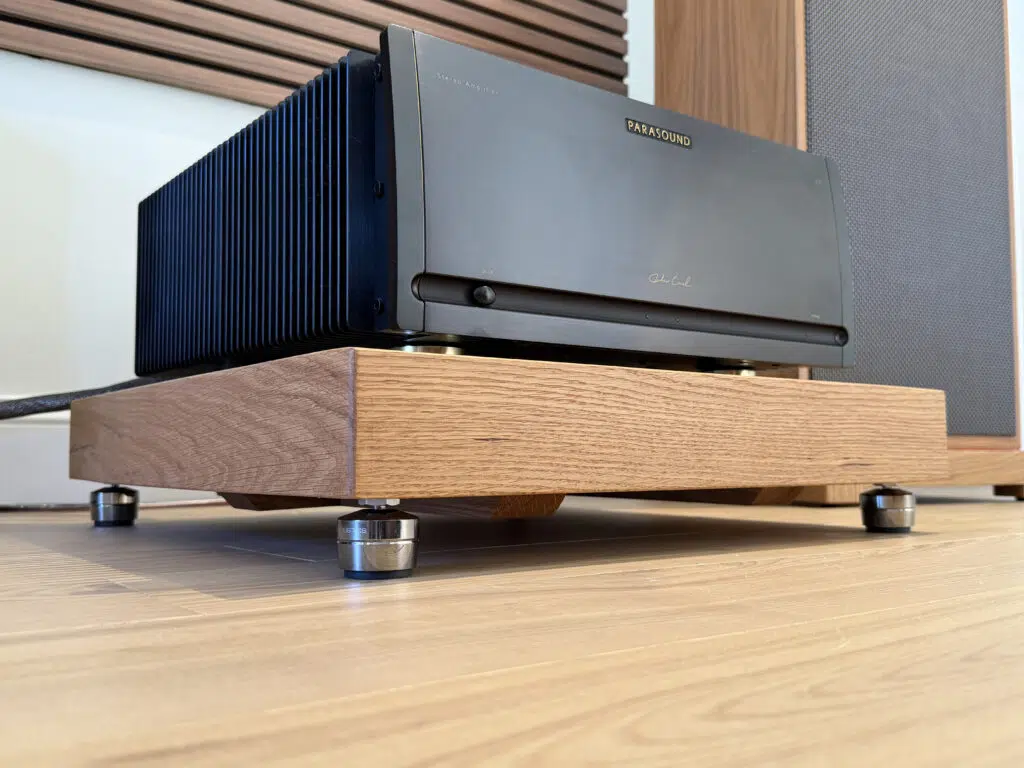
Two Essential Tools for Isolation: Platforms vs. Amplifier Stands
To protect your high-fidelity gear effectively, audiophiles rely on two complementary solutions:
1. Isolation Platforms & Amplifier Stands (The Foundation)
These are rigid, heavy, and purpose-engineered bases that sit between your equipment and the floor or rack shelf. When you install a dedicated amplifier isolation platform, it acts as a massive barrier. Constructed from dense audiophile materials – such as premium hardwoods (walnut, maple, oak) or specialized composites – this specialized amplifier stand absorbs and dissipates structural floor vibrations before they can reach your amplifier’s chassis.
2. Isolation Footers (Component Level)
Footers go directly under the component itself. Unlike cheap factory rubber feet, high-performance isolation pucks use soft dampening polymers or hard resonant-draining materials (like ceramic, brass, or carbon fiber) to drain internal vibrational energy away from the chassis.
Pro Tip: For the ultimate performance, use them together. A heavyTAFI Made amplifier stand handles structural low-frequency vibrations from the room, while isolation footers treat micro-vibrations at the component level.
How Isolation Improves What You Hear
Implementing isolation for your gear can have wide-ranging, noticeable effects on the listening experience:
|
Sound Quality Aspect |
Improvement from an Amplifier Stand & Isolation |
|
Clarity & Detail |
Eliminates micro-distortion so subtle instruments, room acoustics, and trailing notes emerge cleaner. |
|
Soundstage & Imaging |
A lower noise floor allows each instrument to occupy its own precise, three-dimensional space. |
|
Dynamics |
Quiet backgrounds allow the contrast between soft acoustic passages and explosive crescendos to breathe naturally. |
|
Bass Tightness |
Prevents low-frequency feedback loops, yielding tighter, deeper, and more articulate bass response. |
Solid-State and Digital Gear – Not Just Tube or Analog Systems
It is a common misconception that only analog gear needs isolation. Even solid-state power amps and digital-to-analog converters (DACs) contain massive transformers that vibrate at 60Hz, a phenomenon well-documented by the Audio Engineering Society. This internal hum degrades signal fidelity. Using a premium amplifier isolation platform helps these power supplies operate precisely, while a robust amplifier stand preserves pure, jitter-free signal transfer from your source to your speakers.
First Steps: How to Optimize Your Audio System Isolation
If you want to upgrade your system’s isolation, follow this proven roadmap:
- Address the Main Vibration Source: If your audio rack is unstable or sits on a springy hardwood floor, a solid amplifier stand or heavy platform is your most impactful upgrade.
- Isolate Source Components & Preamps: Once the foundation is stable, place high-quality isolation footers under your most sensitive gear, such as DACs, tube preamps, and network transports.
- Avoid Cheap DIY Substitutes: Standard foam pads, felt, or hardware-store rubber pads are too soft, degrade over time, and fail to manage the wide frequency range encountered in high-end audio. Engineered solutions from brands like TAFI Made are specifically tuned to damp the exact resonant frequencies that harm audio performance.