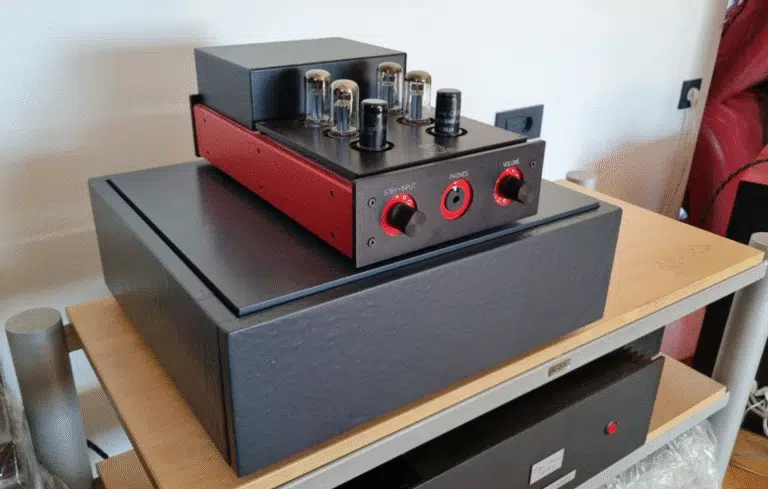
When designing premium audiophile furniture, solid hardwood selection is the single most critical factor for engineering high-end audio racks, vinyl shelves, and isolation platforms. Every wood species features a distinct cellular density that interacts with mechanical vibrations differently. For music lovers looking to isolate sensitive equipment, choosing the right solid wood is just as important as selecting the electronic components themselves.
While mass-produced materials like MDF or cheap birch plywood are common in retail, nothing dampens resonance and elevates fidelity quite like premium solid hardwood. According to architectural and structural studies on wood properties, natural fibers act as a mechanical buffer. Here is a deep dive into how the top four wood choices perform in high-end environments, and why two of them stand out as the ultimate foundation for your system.
1. Premium Audiophile Furniture with Walnut: The Acoustic Gold Standard
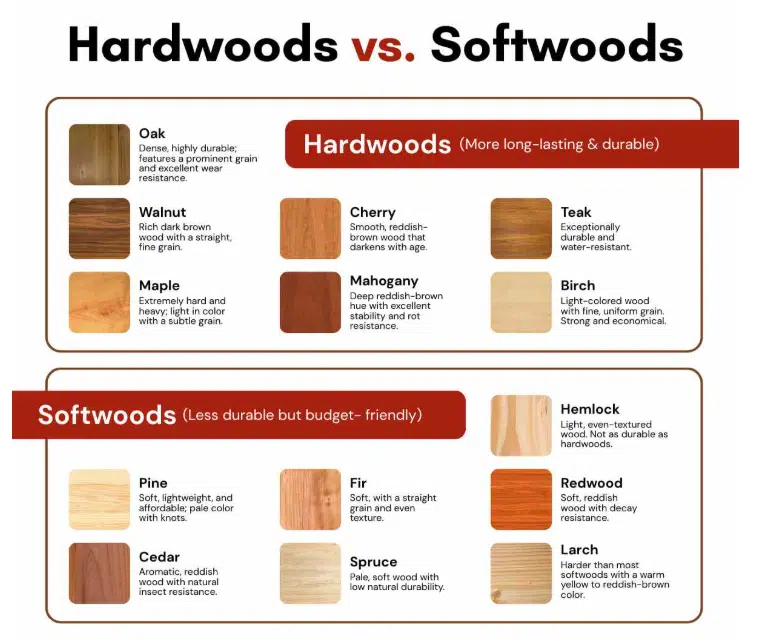
When it comes to building a high-end amplifier stand or turntable isolation platform, Walnut is the absolute peak of premium design. It sits at the perfect structural sweet spot between raw density and natural internal damping.
- Acoustic Properties: Walnut delivers an incredibly balanced, warm, and natural tonal profile. It acts as an organic acoustic filter, smoothing out harsh upper-midrange frequencies while preserving deep, well-defined bass notes.
- The Audiophile Edge: Unlike synthetic materials that can deaden the sound entirely, Walnut absorbs parasitic vibrations without robbing the music of its energy. It is the finest choice for tube amplifiers, high-end turntables, and sensitive DACs.
- Aesthetics: Beyond its acoustic superiority, its rich chocolate tones and striking grain patterns bring a mid-century modern sophistication to custom audiophile furniture setups.
2. Heavy-Duty Audiophile Furniture in Oak: The Resonance Powerhouse
If your goal is absolute structural mass and maximum resonance suppression, Oak is the definitive powerhouse. For heavy, high-current monoblocks or large speaker setups, it is virtually unmatched in the audio world.
- Acoustic Properties: Oak is a highly dense, open-grained hardwood. This massive density completely limits unwanted kinetic resonance, ensuring that energy from transformers or heavy speakers doesn’t bleed back into your signal chain. It grounds the soundstage, offering exceptional lower-midrange clarity and a rich, authoritative bass response.
- The Audiophile Edge: If you are designing a heavy-duty amplifier stand, Oak provides the rigid, non-resonant foundation needed to eliminate microphonics in your gear.
- Aesthetics: Known for its prominent, rugged grain and timeless durability, Oak feels substantial, traditional, and incredibly clean in modern audio spaces.
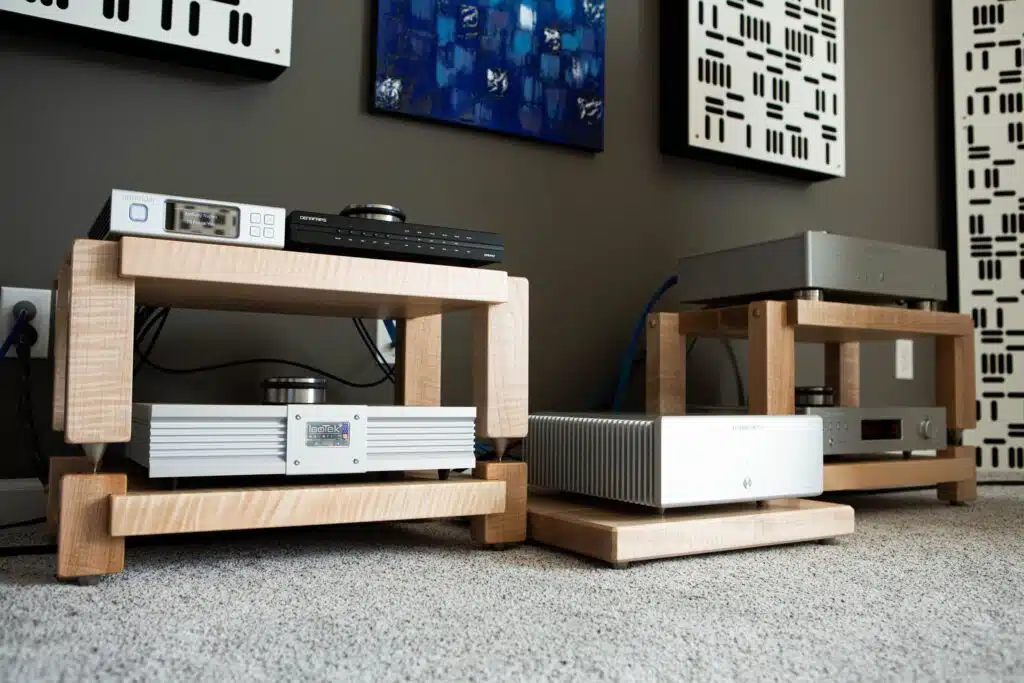
3. Custom Maple Racks: The Bright Studio Alternative
Maple is exceptionally hard, dense, and rigid, making it a frequent choice in recording studios where absolute analytical neutrality is required.
- Acoustic Properties: Maple offers a very bright, articulate tonality. Because it is so stiff, it reflects energy rather than absorbing it. This results in a highly detailed midrange and crisp highs, though some audiophiles find it can lean slightly clinical or dry in secondary systems.
- Best For: Solid-state gear that needs a touch of extra transient speed, though it lacks the organic warmth found in Walnut platforms.
4. Vintage Cherry Bases: The Warm and Musical Option
Cherry is a softer hardwood compared to Oak and Maple, offering a smooth, distinctively colored musical character.
The Downside: While musical, it lacks the raw mass of Oak for heavy amplification support and the perfect acoustic balance of Walnut, making it a more niche choice for specific acoustic tuning.naturally, unlocking the true potential and depth of your high-fidelity system.
Acoustic Properties: Cherry accentuates the midrange, introducing a pleasant, colored warmth to the playback. It is favored by vinyl enthusiasts who want a vintage, lush soundstage.
Why Solid Wood Audiophile Furniture Beats Artificial MDF
High-end audio gear isn’t just about holding equipment—it’s about tuning the room. Synthetic materials like MDF lack a complex cellular structure, often causing mechanical energy to back up into your components. Selecting a solid Walnut or Oak amplifier stand allows the natural grain to scatter and dissipate resonance naturally, unlocking the true potential and depth of your high-fidelity system.
If you want to protect your equipment and take your soundstage to the next level, explore our custom audiophile furniture collection or contact the TAFI Made team today to design a bespoke setup tailored exactly to your high-end audio components.