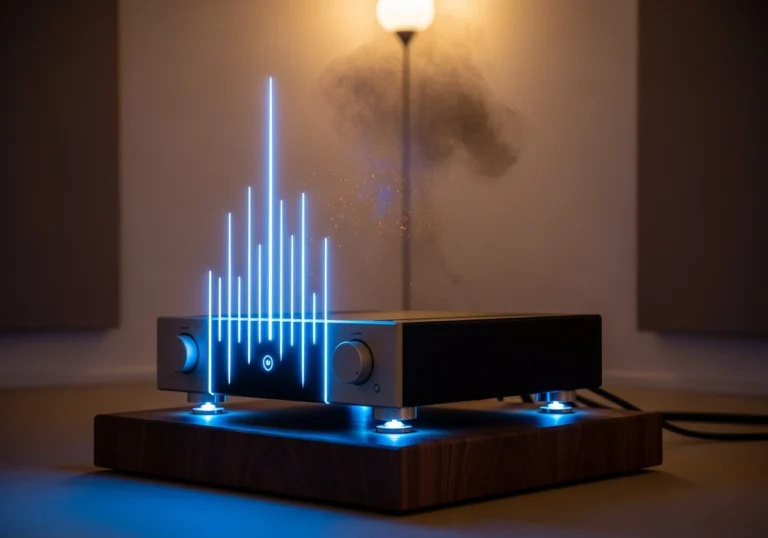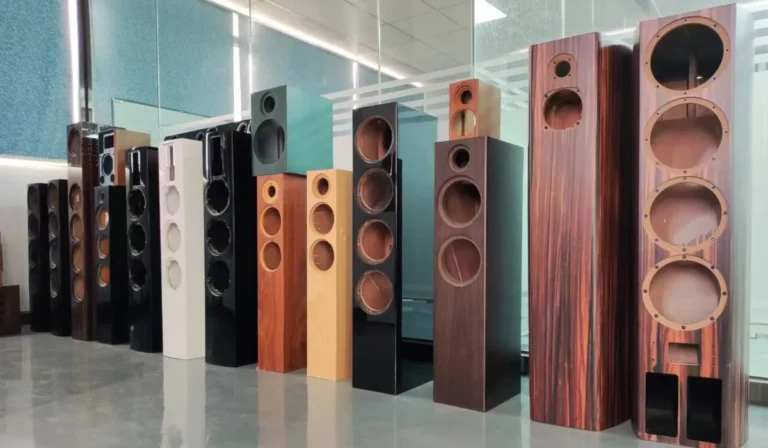
A high-performance isolation platform is the ultimate foundation for any high-end audio system fighting mechanical resonance. While audiophiles invest heavily in premium electronics, placing a pristine turntable, DAC, or tube amp on a standard rack can severely bottleneck the entire system.
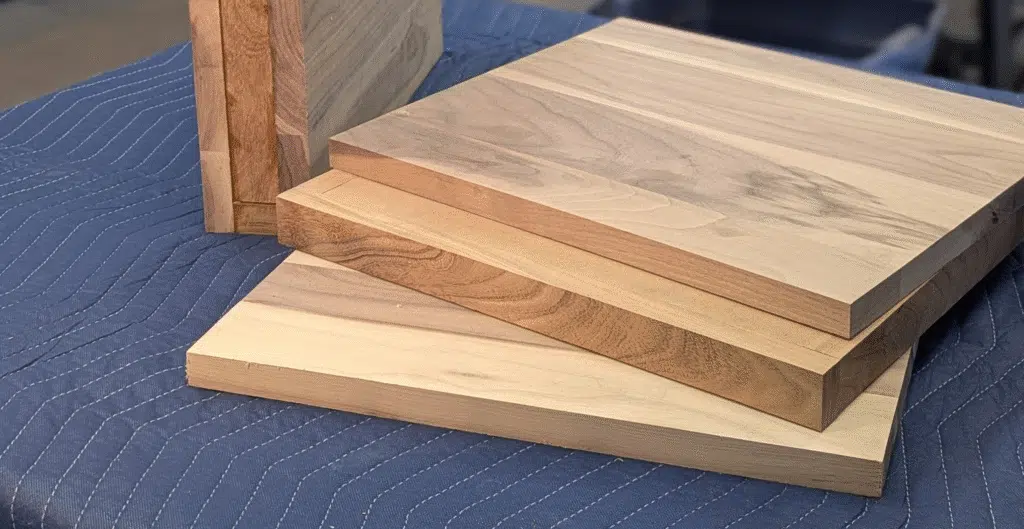
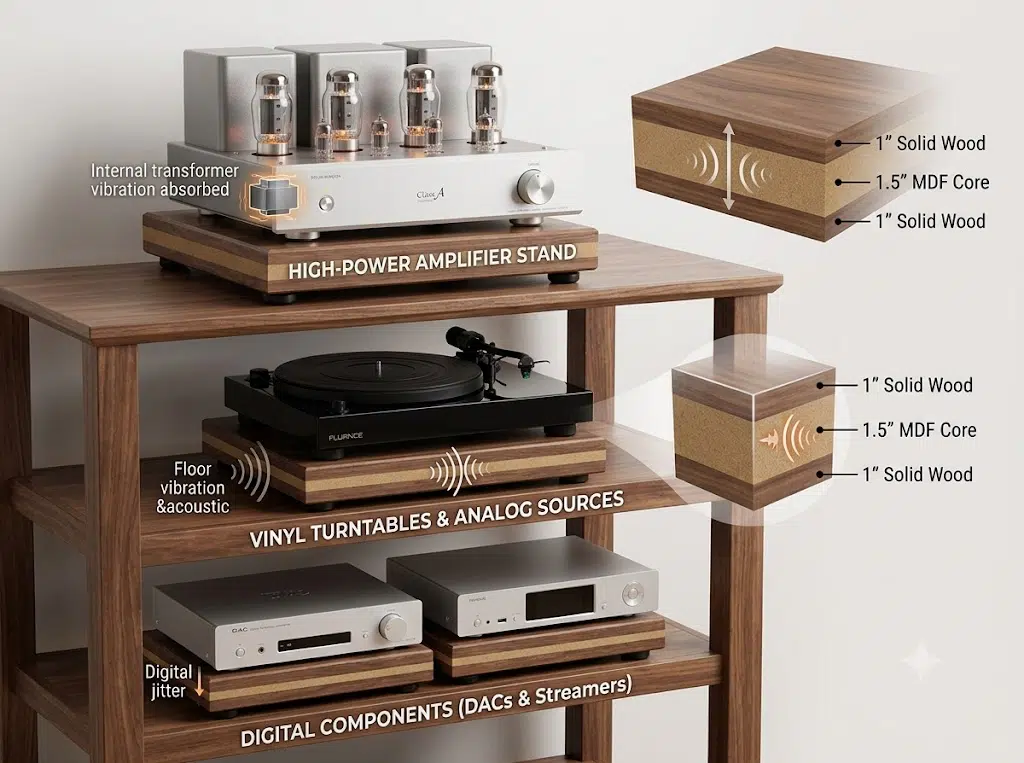
While traditional solid hardwood blocks introduce distinct tonal coloration and standard MDF shelves completely deaden the sound, a hybrid approach solves both engineering challenges. A multi-layered sandwich isolation platform—engineered with 1” solid wood + 1.5” MDF core + 1” solid wood—creates a heavy-duty, 3.5-inch vibration-controlled amplifier stand and component base that outperforms single-material solutions.
1. Why Single Materials Fail as an Audio Isolation Platform
Micro-vibrations degrade audio fidelity through microphonics – where mechanical movement turns into electrical noise. High-fidelity audio components face two distinct types of interference:
- Structure-borne vibration: Low-frequency rumble from floorboards, heavy footsteps, and transformer hum inside power supplies.
- Airborne vibration: High-frequency acoustic energy and intense bass waves generated by your loudspeakers coupling back into the equipment chassis.
A single-material isolation base cannot absorb both frequencies. If you use a solid hardwood slab, you get excellent high-frequency dissipation and a natural musical texture, but wood naturally flexes and reacts to low-frequency energy. Conversely, using pure Medium-Density Fiberboard (MDF) provides immense low-frequency damping, but it over-damps high-frequency micro-details, leaving the sound stage compressed, flat, and lifeless.
2. Inside the 3.5-Inch Sandwich Isolation Platform Architecture
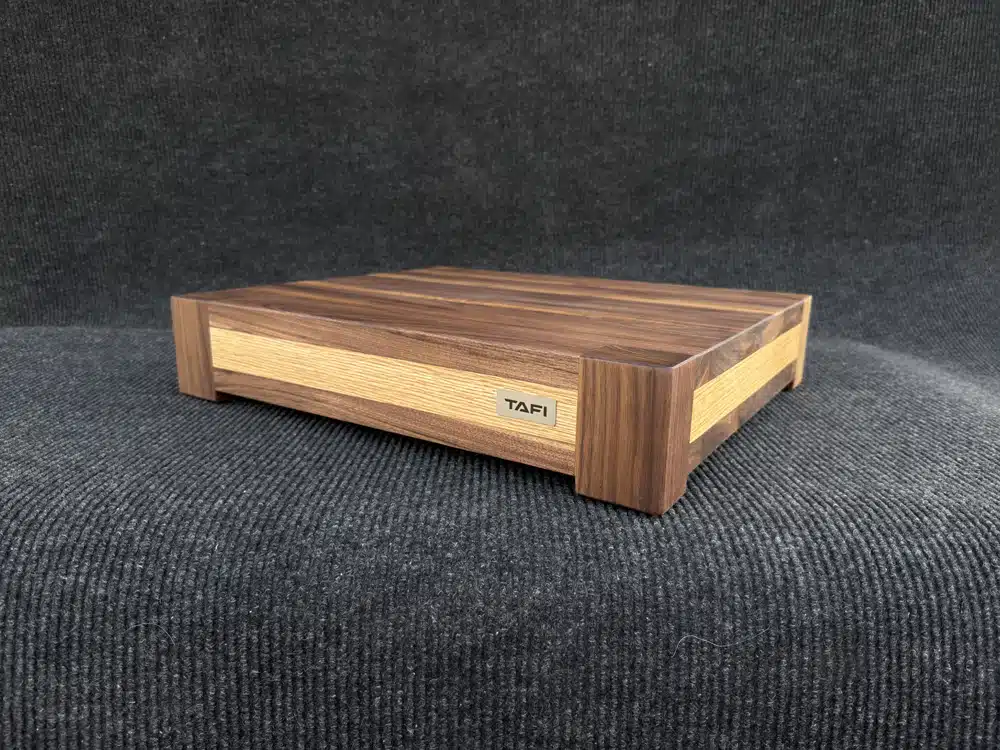
By combining the structural properties of organic hardwood and acoustic MDF into a symmetrical 3.5-inch stack, this hybrid platform functions as a highly effective mechanical low-pass filter.
Top Layer: 1” Premium Solid Wood
The component’s isolation feet interface directly with natural wood. This layer manages upper-midrange and high-frequency resonances, preserving micro-dynamics, air, and instrumental separation without adding sterile coloration.
Core Layer: 1.5” High-Density MDF
Acting as the primary acoustic sink, the dense center layer absorbs low-end acoustic feedback and structural energy. It stops speaker energy from traveling back up into sensitive analog circuits or turntable bearings. Industry studies on acoustic damping confirm that composite structured materials absorb mechanical energy significantly better than pure crystalline structures, making it an ideal core for high-end audio furniture.
Bottom Layer: 1” Premium Solid Wood
Completes the symmetrical acoustic sandwich, adding necessary physical mass, structural rigidity, and balancing the overall resonant profile of the amplifier stand.
High-Power Amplifier Stands
Heavy Class A power amplifiers and tube gear utilize massive internal transformers that vibrate constantly at 50/60 Hz. Placing a heavy amplifier directly onto a dedicated sandwich amplifier stand neutralizes this internal hum before it can affect the sensitive audio signal, lowering the noise floor significantly.
Vinyl Turntables & Analogue Sources
Turntables operate on a micro-groove level where any floor vibration causes audible rumble or skipping. The 3.5-inch high-mass platform decouples the stylus from footfall interference and structural room nodes.
Digital Components (DACs & Streamers)
Vibration compromises the accuracy of internal master clocks, leading to digital jitter. Providing a stable, resonance-free foundation allows high-resolution DACs to resolve finer spatial details and accurate soundstage depth.
Ideal Components for Sandwich Platforms
|
|
|
|
|
|
|
|
|
|
|
|
|
|
|
Why Choose a TAFI Made Sandwich Isolation Base?
Thinner 1-inch or 2-inch shelves lack the mass required to sink low-frequency energy from heavy audiophile gear, while thicker blocks become overly bulky without offering additional acoustic benefits. The TAFI Made 3.5-inch sandwich construction represents the engineering sweet spot for structural damping and high-end audio furniture design.
Investing in a proper amplifier stand and component isolation system isn’t an afterthought – it is the foundational layer that allows high-end audio components to perform to their exact engineering specifications.