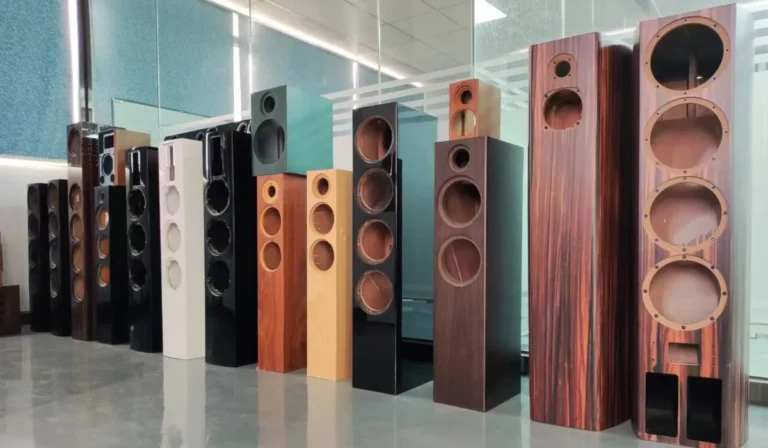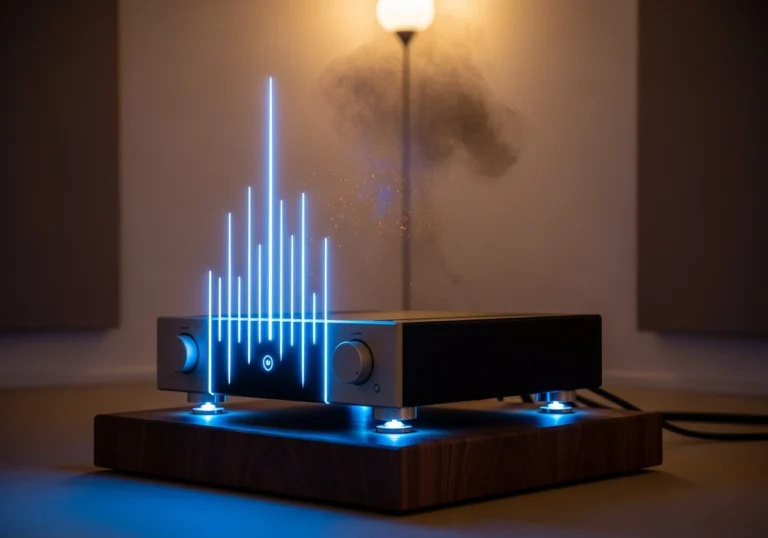
Using high-quality isolation platforms is the most effective way to eliminate unwanted chassis resonance and elevate your audio system. Every high-end audio system shares a common, often overlooked challenge, which is mechanical vibration. Even if you have invested heavily in premium components, your system’s sound will never reach its true potential until structural resonance is properly managed. This is where dedicated hifi racks and a specialized amplifier stand become essential system components rather than optional accessories to complement your setup.
Where Audio Distortion and Vibration Come From
In a typical listening room, micro-vibrations enter your signal path from multiple sources, degrading acoustic performance. Wood floors act like giant tuning forks, transferring low-frequency energy back into your gear. At the same time, high sound pressure levels (SPL) from speakers physically shake the chassis of your source components.
Internal component hum is another issue. Heavy power transformers inside your electronics create localized, high-frequency hum, while turntable motors and even footsteps create low-frequency footfall interference. When these vibrations reach sensitive internal circuitry, especially in tube amplifiers, DACs, and vinyl setups, they cause microphonic distortion. The result is a smeared soundstage, muddy bass, and a loss of low-level detail.
Why Your System Needs Dedicated Isolation Platforms
Investing in specialized isolation platforms changes the mechanical relationship between your gear and the room. Instead of allowing energy to bounce back into the component, it manages the vibrational path through targeted dissipation.
When you place a component on a proper base, it absorbs structural energy and dissipates floor-borne and shelf-borne vibrations before they reach the chassis. It stabilizes heavy electronics, keeping high-current power supplies structurally grounded, reducing micro-vibrations in capacitors and vacuum tubes.
High-quality wood controls resonance frequencies naturally without trying to completely deaden the sound, allowing the music to retain its organic texture. Finally, it sharpens spatial imaging, because by lowering the noise floor, instruments get distinct boundaries within the stereo image.
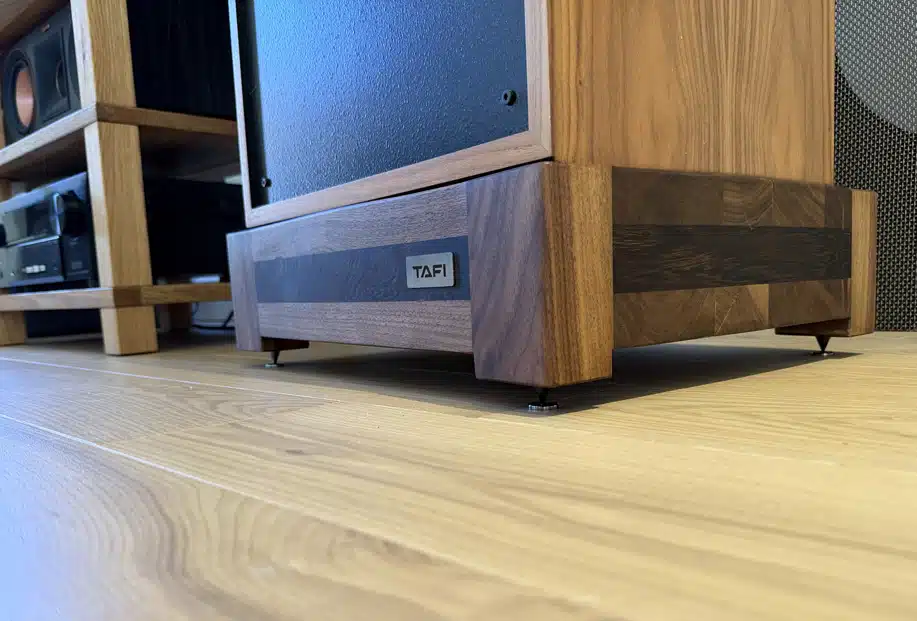
Selecting the Right Wooden Amplifier Stand for Heavy Gear
For heavy mono-blocks and massive tube equipment, a standard shelf is rarely enough. A heavy-duty amplifier stand provides the rigid, dense foundation required to drain internal transformer hum away from sensitive audio circuits.
When choosing an amplifier stand, the mass and material of the platform are critical. Thick hardwoods absorb kinetic energy much better than thin glass or lightweight metal frames, which often ring and add their own coloration to the music.
The Direct Impact on Soundstage and Realism
When you decouple an audio component from its environment using premium isolation platforms, the acoustic transformation is immediate. Listeners typically notice an expanded soundstage with deeper left-to-right separation and a more defined center image. Vocals lose their artificial fuzz, and instruments occupy a specific, holographic space in the room.
Because the component operates without mechanical interference, transient response improves. Bass articulation becomes tighter and faster, stripping away the boomy resonance caused by floor coupling. The micro-details in high-resolution audio files or vinyl grooves finally become audible, creating a much more emotional and realistic listening experience.
Why Solid Wood is Superior for High-End Audio Equipment
While synthetic materials often over-dampen gear, making the music sound clinical or dead, solid hardwood offers a natural balance of damping and rigidity. It acts as an organic mechanical filter.
Whether you are placing a sensitive turntable on a dedicated wood base or supporting a massive tube amp on a low-profile amplifier stand, managing vibration transforms the listening experience. For most audiophiles, upgrading the physical foundation of their system yields a more significant, audible improvement in clarity than swapping out premium cables.
To maximize the acoustic benefits, it is important to properly position your equipment on a stable surface. You can check our guide on how to arrange your premium audio furniture on the tafimade.com homepage to optimize your room layout. For those interested in the deep engineering principles of sound damping, the mechanical theories are thoroughly documented by the Audio Engineering Society in their research on structural resonance control.